Business travel cost estimator
- Cost per traveler for this trip
- $1,547
- Computed on this page from the inputs below
- Cost of the trip for everyone going
- $3,094
- Computed on this page from the inputs below
- Cost per traveler per day
- $386.75
- Computed on this page from the inputs below
- Share of the trip that is the fare
- 31
- Computed on this page from the inputs below
Every figure here comes from the figures you enter and the method stated beside it: your fares, your nights, your hotel rate, your ground transport, your company's own allowance and caps. Where a worksheet borrows a public figure as a default, the federal standard lodging and meals rates for instance, the page names the source and the date it was read.
Email me this result
We will send you these figures and a link back to them. One email, nothing else unless you tick the box.
The figures above are one trip worked as an example ($1,547). Put your own fares, nights and caps in and the answer follows as you type.
Download the Business travel cost estimator worked example (CSV)
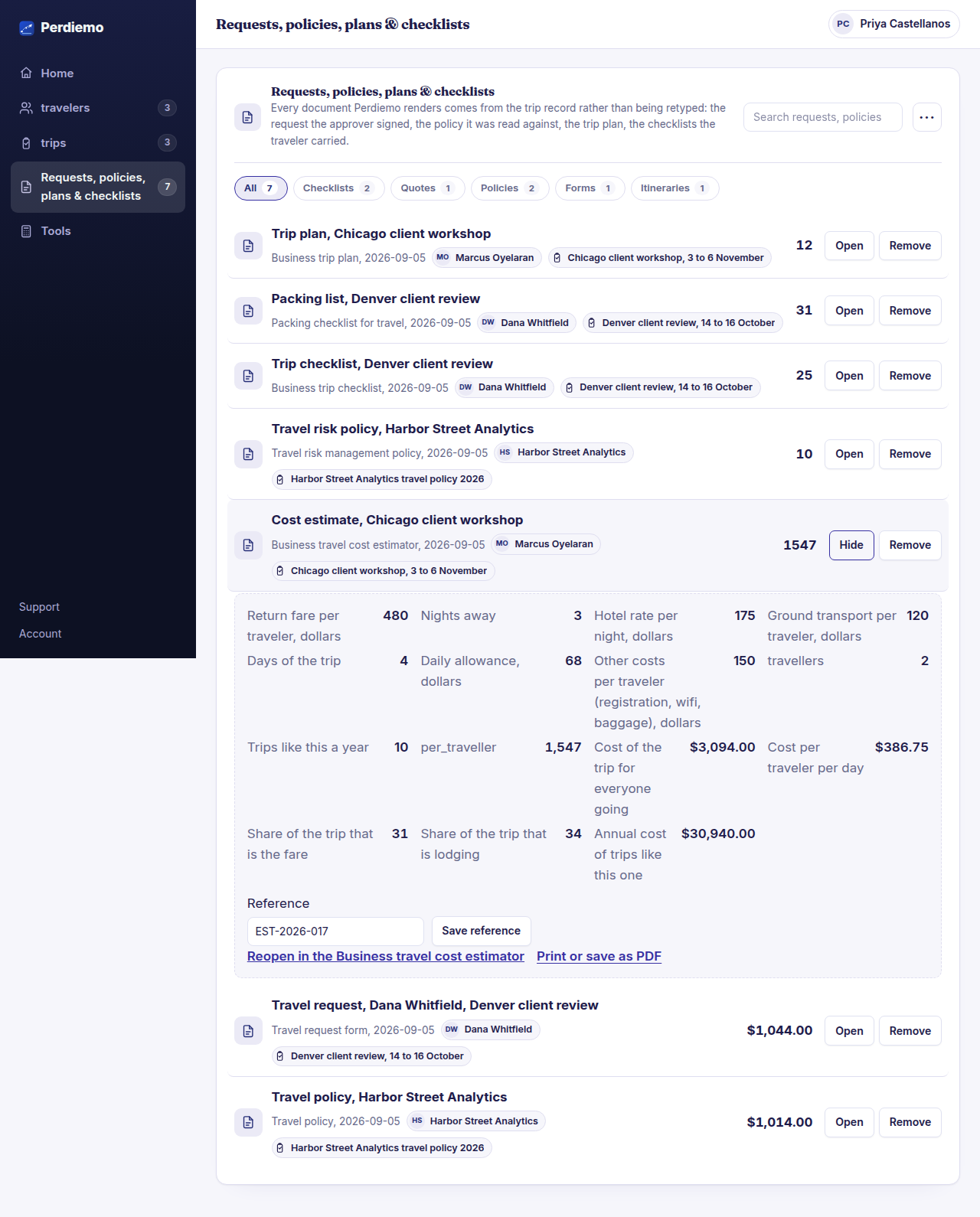
The business travel cost estimator prices a trip from the five things a trip actually costs per traveler: the return fare, the nights at a hotel rate, the ground transport, the days at the company's daily allowance and the incidentals that never make the budget (registration, wifi, baggage). It returns the cost per traveler, the cost for everyone going, the cost per traveler per day, what share of the trip is the fare and what share is lodging, and the annual cost of trips like this one, so a company can set its caps where they move the total and budget the year from its own figures rather than an industry average.
Why the estimate is built per traveler and per day
Two travelers on a four-day trip and one traveler on an eight-day trip can cost the same and be controlled differently. The per-traveler figure is what the request form carries; the per-day figure is what an approver compares across requests; and the trip total is what the budget absorbs. The estimator shows all three from one set of inputs.
The shares tell you which cap matters
On the worked example three nights at $175 are more than a $480 fare, so the nightly cap in the travel policy moves the total more than the fare cap does. The estimator states the fare share and the lodging share so the caps go where the money is; a company whose trips are short and far will see the opposite and set its fare cap first.
From one trip to the year
Multiply by the travelers and the trips a year and the estimator gives the annual figure for trips like this one. That is the number to put beside last year's card statements: if the statements are higher, the incidentals line is where the difference usually hides. Perdiemo Pro keeps the estimate against each real trip so next year's figure comes from the record.
What the office manager asks before using the Business travel cost estimator
Which figures do I need before using the business travel cost estimator? A fare quote or the policy's cap, the nights, the hotel rate, a figure for ground transport, the days, the company's allowance, a figure for incidentals, how many are going and how many trips like this the company makes a year.
What is a normal cost for a business trip? Only your own figure is worth quoting. The worked example, a four-day trip with three nights, comes to $1,547 per traveler; a one-night trip in a cheaper city with the federal standard lodging rate as the cap comes to a fraction of that. The estimator gives you yours.
Why is there an incidentals line? Because registration fees, hotel wifi, baggage and parking are on every card statement and in no estimate. The line is small per trip and large per year, and an estimate without it is always under.
Where the method in this worksheet comes from
GSA, Per diem rates: the federal standard lodging and meals and incidentals rates by location and fiscal year. Why the allowance is an input with a federal default rather than a figure the sheet publishes: the GSA standard rate is set per fiscal year and per location, so the estimator takes the company's chosen figure and names the source of the default.
IRS Publication 463, Travel, Gift, and Car Expenses: what counts as business travel and what records substantiate it. Why fare, lodging, ground and meals are separate lines: Publication 463 treats them as distinct categories of travel expense with different substantiation, and an estimate in the same shape becomes the record.