Travel policy
- Two-night trip ceiling the policy implies (fare, two nights, three days)
- $1,014
- Computed on this page from the inputs below
- Trips a year the policy will govern
- 72
- Computed on this page from the inputs below
- Annual spend if every trip hit the ceiling
- $73,008
- Computed on this page from the inputs below
- Trips per traveler a year
- 6
- Computed on this page from the inputs below
Every figure here comes from the figures you enter and the method stated beside it: your fares, your nights, your hotel rate, your ground transport, your company's own allowance and caps. Where a worksheet borrows a public figure as a default, the federal standard lodging and meals rates for instance, the page names the source and the date it was read.
Email me this result
We will send you these figures and a link back to them. One email, nothing else unless you tick the box.
The figures above are one trip worked as an example ($1,014). Put your own fares, nights and caps in and the answer follows as you type.
Download the Travel policy worked example (CSV)
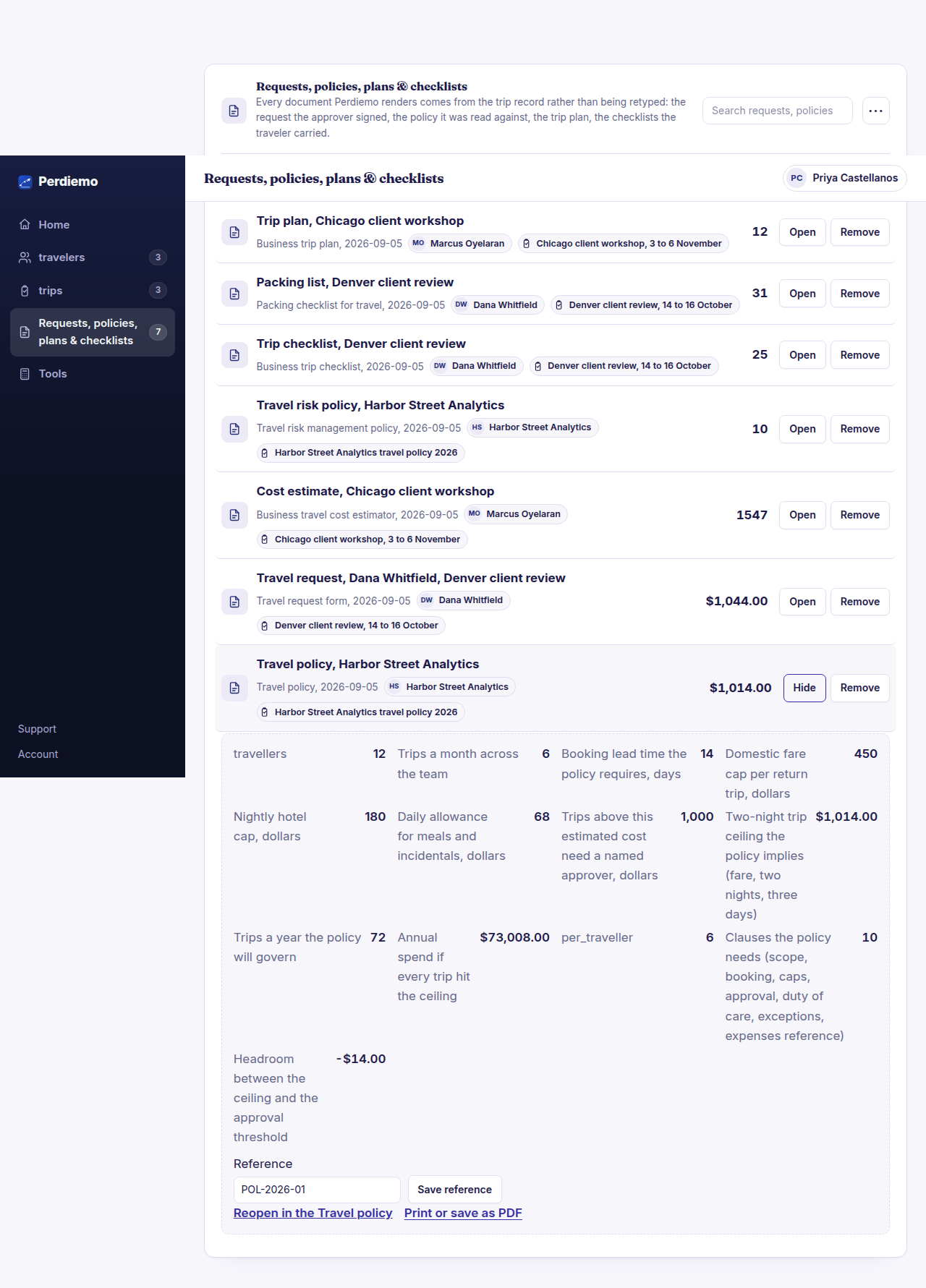
The travel policy worksheet drafts the rules a small company's team books against from the figures the company already applies in its head: who travels, how often, how far ahead a trip must be booked, the fare and nightly caps, the daily allowance, and the estimated cost above which a named approver has to say yes. It returns the two-night trip ceiling those caps imply, the annual spend if every trip hit it, the trips per traveler and the headroom between the ceiling and the approval threshold, so the policy is written around numbers the office can quote rather than adjectives.
Why the policy starts from caps and a threshold
A policy that says 'reasonable' is read differently by every traveler and argued about after the trip. A fare cap, a nightly cap and a daily allowance give the traveler a figure to book against and the approver a figure to compare a request with. The threshold above which a named approver signs is what stops a two-night trip from needing the owner's attention while a two-week one gets it.
The ceiling is the figure the policy is judged by
A return fare at the cap, two nights at the nightly cap and three days at the allowance is the trip most small companies make most often. The sheet works that ceiling and compares it with the approval threshold: if the headroom is negative, every ordinary trip needs the senior approver and the threshold is set wrong; if it is large, the caps are doing the work and the threshold catches the exceptions.
The clauses a usable policy has
Scope (who it covers), booking (lead time, where to book, preferred suppliers), caps (fare, lodging, allowance), approval (threshold and who), duty of care (check-ins, advisories, emergency contacts), exceptions (how to ask, who decides), expenses (a pointer to the claims process, which is not this document), and the review date. Ten clauses, most of them a paragraph. Perdiemo Pro files the version every request is read against.
What the office manager asks before using the Travel policy
Which figures do I need before using the travel policy worksheet? How many people travel, roughly how many trips a month, the lead time you want, the fare cap and nightly cap you would defend, the daily allowance you pay and the estimated cost above which a senior approver signs. Every one is your own figure.
Where does the daily allowance figure come from? From you. Many small companies borrow the federal standard rate the GSA publishes for meals and incidentals as their allowance and the standard lodging rate as their nightly cap; the sheet's defaults are those figures, read on the date shown in the sources, and the policy states whatever you choose.
Does the policy cover expense claims? It points to the claims process and stops there. How a traveler is reimbursed after the trip is a different document and a different product; this policy governs what may be booked and approved before it.
Where the method in this worksheet comes from
GSA, Per diem rates: the federal standard lodging and meals and incidentals rates by location and fiscal year. Why the allowance and the nightly cap are inputs with federal defaults: the GSA publishes a standard rate that many small companies borrow, and the figure changes each fiscal year, so the policy states the one you chose and the date.
IRS Publication 463, Travel, Gift, and Car Expenses: what counts as business travel and what records substantiate it. Why the policy defines business travel and the records kept: Publication 463 sets out what counts as travel away from home and what substantiates it, which the policy's scope clause follows.